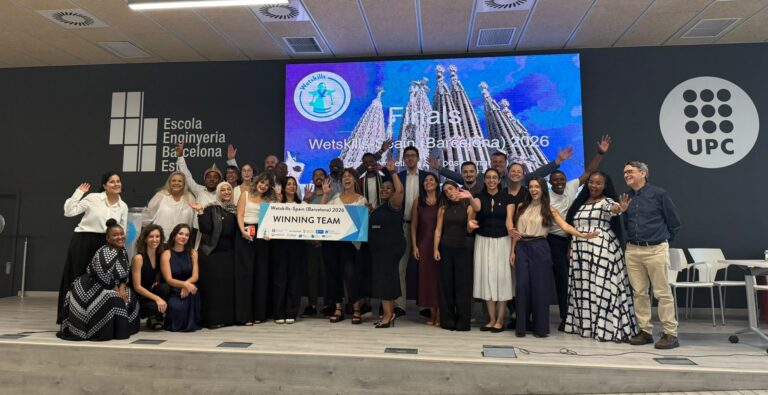
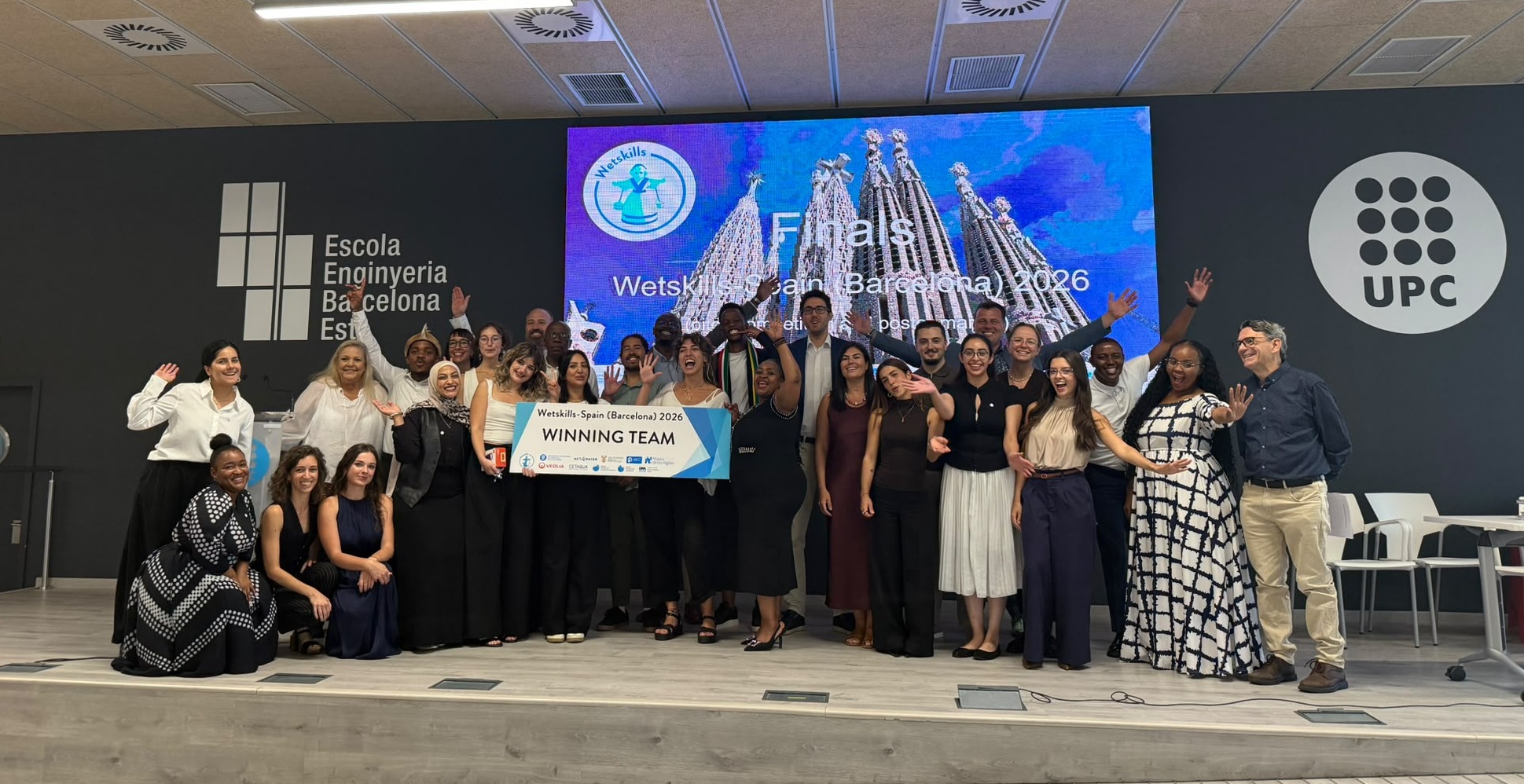
A proposal to transform water management at major events was the winning solution at the Wetskills Barcelona Final Gala, hosted on Wednesday 23 September by the Universitat Politècnica de Catalunya (UPC BarcelonaTech). Young people from 12 countries, including UPC students, worked side by side with water sustainability experts for twelve days to respond to real challenges set by public and private sector organisations.
The programme, developed by Wetskills Foundation, concluded on 23 September at UPC BarcelonaTech, where teams presented their solutions to the programme’s challenges through a pitch. The event featured an institutional opening by José Antonio Travieso, Director of EEBE, followed by a series of remarks from representatives of the organisations behind the programme.
Johan Oost, Director of Wetskills, stressed during his address that “in just two weeks, each team has to understand a complex challenge, come up with a solution, and defend it in a two-minute pitch in front of a jury. That pressure, well supported, brings out the best in people and prepares young talent for the real world.”
Four challenges, one shared roadmap for water
First prize recognised the proposal for helping a major international event leave a positive water footprint on its host territory. Using the 2031 Ryder Cup in Catalonia as their case study, the winning team estimated the water footprint associated with an event of that scale and proposed reduction measures. Through funding for local projects with a positive water impact, the team calculated the investment needed for the event to return more water than it consumes. The jury singled out the proposal for its ability to translate all that technical work into a simple, actionable formula.
Beyond the winning project, participating teams also presented proposals for other real-world challenges, including: regenerative, water-positive Mediterranean tourism (Veolia España), water reuse in the Netherlands (Hollands Noorderkwartier Water Authority – HHNK), and balancing groundwater rights with municipal network use in South Africa (Department of Water and Sanitation).
“Innovation doesn’t just need to create impact, it needs to be lasting, measurable, and demonstrable.” Craig Tinashe, Act4Water
To shape their proposals, all four teams relied on the Act4Water Standard, a framework that certifies projects and organisations with a positive water impact through a system of Water Credits, also known as Credits Aqua Positive (CAPs). Craig Tinashe, representing the Act4Water initiative, noted that “Wetskills participants have learned that innovation doesn’t just need to create impact, it needs to be lasting, measurable, and demonstrable.”